Critical Studies
In our Critical Studies lessons we are concentrating on the following subjects they are:
Communication Theory
Semiotics
Psychology - Art in the mind
New Values
Representation
Effects theories
Which one the elements above are going to be researched in depth so this will help me in my practice.
What is the role of art and design in Society?
It looks nice and is aesthetically pleasing to the eye.
For communication (cave art etc)
Im am going to looked into what the role of art and design has in society and how it connects with my own practice.
I believe that art in society is a way of communication and this has gone on since cave art. Photography is also a from of communication using different colours, textures, angles expressions can show a way of communication.
Example:

This image by Dorthea Lange shows a mother and her children, the way the subject is positioned, her facial expression and the use of black and white communicates this image is a sad image. The image cropping gives the image that personal feel to it.
_________________________________________________________________________
Lecture two
Define what it means and do I believe it’s true or false.
Ricy Poyner - "Graphic design is the new fine art"
What does he means by "graphic design" and "Fine Art"?
Group Ideas
- Graphic Design is art and design.
- Fine Art is produced to be appreciated for its imaginative and intellectual purpose. But isn’t as appreciated as much as graphic design although it is studied more.
- There is more to Graphic Design than there is to fine art.
- There is a different element to Graphic Design. We have Graphic Design everywhere and fine art isn't as big nowadays.
I believe has chosen Graphic Design because it’s newer element to art. Graphics design is for communication and trying to sell a product where as Fine Art is more enjoyment.
Graphic Design consists are the following -
Commercial photography
Fashion textiles
Interior Design
Exhibition design
"Art is not self-expression, it is communication" - Raymond Carner.
Fine Art elitist therefore Graphic Design isn’t elitist enough.
Graphic design
· Purpose
· Use mechanism
· Brief for a client (self expression doesn’t work here)
· Profit
· Demand
· Use
· Computers
· Job title (more reduncay) - Explicit
· Popular
· More accessible
· Communication
· Ethermal (doesn’t collect) - pop art
Fine Art -
· Thought not to have a purpose
· Seen as useless
· More freedom
· Expression
· Personal
· Product (selling its self)
· Profit
· Paintings
· About the work itself.
· Artist (Entropic) - Implicit
· Was not about being popular
· Form of communication.
· Permanent
· Secular
· Expression
· Individual
Commercial Art
· Commission
· Wage
Conclusion –
Graphic design can use the same technique but it can be Fine Art. If there isn’t a client there that means its Fine Art. People could go into Graphic Design because there uncomfortable calling themselves Fine Artists.
Ricy Poyner is right in a sense and wrong in another. Maybe graphic design is more important and more accessible than Fine Art is nowadays. Without the church advertising god we wouldn’t have Graphic Design.
Websites
________________________________________________________________________
Lecture 3
Communication Theory
The Shannon-Weaver mathematical Model, 1949

Own example

Noise Source
Concept:
· Entropy - processes of breaking down.
· Redundancy - not getting the message across
· Noise - Getting in the way of the message.
· Channel Capacity - I.e. only so much space in a gallery. Could use more space.
How do we encode communication?
· Language
· Implying
· Inferring
· Levels and layers of communication
· Visual
Deconstruct Work
Noise Source
- Other thing can be Noise Source i.e. adverts buy this no buy this.
- Environmental
- Other opinions.
Channels:
Demanding more channels
Messages must be the same
Redundant communication:
- Re enforce messages - I.e. in advertising messages are repeated, it’s building up the messages.
In art Guernica - full of small messages to build up to a powerful message.
Art is entropic. Science
Aberrant decoded - Alberto Echo
Apparent decoding - thing goes somewhere else.
Beating noise - redundancy, repeating,
Volume - Stands out, I.e. artist shock people with their work to stand out.
Example
Channel vs. noise (increase channel increases noise)
Lots of redundancy is usually the worst and cheapest.
The diagram of Shannon-Weaver Mathematical Model, 1949 isn’t a rule it’s a template.
______________________________________________________________________
Lecture 4
Coding and Decoding
Semiotics is the study of a signs.
What is a sign?
In semiotics, a sign is:
"Something that stands for something to someone in some capacity"
It thought of as a discrete unit word meaning including:
Gestures, scents, textures, sounds, images, words, tastes.
I.e. In a shop the smell of bread makes you want to buy bread even if you can't see it.

CAT - That is not a cat it’s the word that represents the cat. It’s the shapes and symbols of the word or drawing.

That is not a dog it’s the word that represents the dog. It’s the shapes and symbols of the word or drawing.

That is not a apple it’s the word that represents the apple. It’s the shapes and symbols of the word or drawing.
That is not a dog it’s the word that represents the dog. It’s the shapes and symbols of the word or drawing.
That is not a apple it’s the word that represents the apple. It’s the shapes and symbols of the word or drawing.
What is a sign?
A sign is made up of two parts, they are:
Signifier - The actual word, seeing or drawing.
Signified - Referent, the actual thing i.e. A cat.
Signified
· Denotative ( what it is ), - Explicit
· Connotative - Implicit
Connotative
Cat - Fury, whiskers, female (name), eyes, Egyptians, territorial, unpredictable, witches, cruel
Dogs - Loyal, Selfish, Cruel
Owl - Wisdom, wide, old, evil (Bosh - nock tonal)
Snake - Slimy, evil, hypnotic, unpredictable
Snake - Slimy, evil, hypnotic, unpredictable
Meanings change over time. Sign are rarely on their own there usually grouped to keep in context.
Meaning is fluid.
Meaning is fluid.
Photograph is still a sign.

Panzani Advert –
- Looks Italian but a French brand.
- Spaghetti - Italian, the word lux stands for luxury. Colour
- Italian and colours are warm
- The string bag suggests that it’s a sunny place.
- Fresh food suggests a fresh healthy life style. The idea of an Italian life style.
- Big messages but simple advert. The idea fresh food suggests a long healthy life style.
Donatives what it implies.
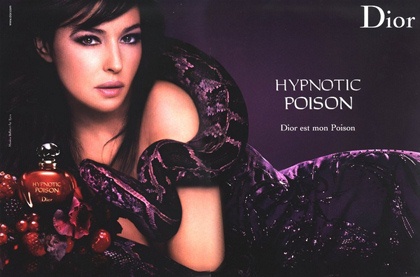
Dior Hypnotic Poison:
- The fruit could suggest that it has a fruity smell.
- The colour resembles seduction, passion and love.
- The Garden of Eden is suggested with the apple and the snake.
- The name is Hypnotic and snakes in films are suggested to be hypnotic i.e. The Jungle book. The snake is very close to the bottle gives the idea of temptation.
- Indulgence everything you every wanted was in Garden of Eden.
- Everything is shiny and new.
- The woman in the image is naked looking at us which suggest power. She’s brunette - more sophisticated and darker.
- Dark back ground.
- Its an expensive brand.
- Apple represents poison and the forbidden fruit. The red apple represents danger.
Overall the advert is a dark sexual image and basically sending the message out wanting something you can’t have. Most adverts nowadays use sex as their way of advertising.
Advertising is more sophisticated in women’s magazine than men’s.

Dior Image
I have chosen the same brand because I want to see if the message they are sending across is the same as the last dior advert.
- I believe this is quite a sexual image the way she is holding her top and the way she is positioned.
- Her eyes follow you like the Mona Lisa.
- The perfume is called “Jadore” which means in English “love”.
- They have used a blonde model which could suggest she is not as intelligent and less sophisticated.
- The colour scheme is quite dark which could suggest mystery, power and elegance.
- Her outfit, jewellery and the dark scene could suggest that it’s more of a night perfume than a daily one.
- The whole advert looks expensive.
Ideal Research:
Roland Barthes - A series of short essays. Images, music, text.
_________________________________________________________________________
Lecture 5 - Semiotics
Semitics is something that stands for something else, and is made up of two parts the signifier and the Signified.
Signifier is the drawing etc.
Signifier is the drawing etc.
Signified - what it stands for, referent:
1. Denotative.
2. Connotative.
3. Combination (to create a bigger meaning/Message)
Death of the Author - The author is not that important it’s the audience. It’s the effect it has on the audience and what it intended.
Three different types of signs:
Icon - resembles its referent i.e a picture of cat resembles a cat.
Index - Linked to the referent. - Linked but you can’t see it. I.e. smoke and fire.
Symbol - Link to the referent is arbitrary a stop sign means stop.
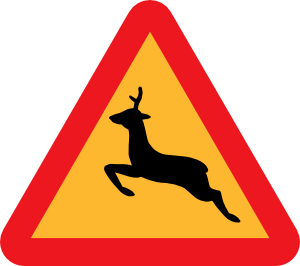
Deer linked to woodlands, Triangle says warning.
I.e. Traffic symbols are symbolic, we decided what they mean.
Examples
Stop sign
Stop sign

Traffic Symbol shape is an icon. The colour and writing is symbolic because we decide that. The colour represents danger.
Recycle Sign

The Icon resembles recycling.

This icon and the colour resembles Love.
Recycle Sign
The Icon resembles recycling.
This icon and the colour resembles Love.
Index Examples
It is directly linked and a natural link.
It is directly linked and a natural link.
Foot prints are indexical.
Thunder is indexical of Thunder.
Pumpkin is indexical for Halloween.
Cake with Candles represents a birthday
Star bucks cup is indexical for coffee.
Paradigms
which sign (change the element changes meaning)
which sign (change the element changes meaning)
Examples
I hate you, I h8 u.
I hate you, I h8 u.
Syntagms
In what order
In what order
Bryan loves Ben - Ben loves Bryan
I like chocolate - Chocolate I like
I want you - You I want
Please can I have - Can I have please
Paradigmatic - Choice of elements - Burroughs’s cut ups
Syntagmatic - Order of elements - exquisite corpse
"Nothing is a sign, unless it is interpreted as a sign"
_____________________________________________________________
Lecture 6
Lecture 6 - Context is Key
Move something it changes the context for example:
Duchamp fountain, it was used as a Urinal then it moves into a gallery and it has a total different meaning.

Araki is a controversial Japanese photographer, his work is thought to be pornographic but he argues that it is art. If you saw his work in an art gallery would you believe it is art or if you saw it in a porn magazine would you believe it is pornographic? Again it's all about the context.

What society thinks is normal and what isn’t. What is the cultural norm?
Context can be changed to make a different meaning.
My context would be for example -
- Gave people a sense of freedom
- Over came adversity
- Conquered the whole of Europe
- Created employed in the war
- Patron of the art
- Great public speaker
- Stopped the government collapsing
- Efficient
________________________________________________________________________
Lecture 7

Cultural - Comparing in context
Social - Impact on society and the way we work
Socio-political - Things that affects us, issues that affect us on a day to day business.
Demographical - The class where from
Logical - Beware of how you use it. I.e. I have a white cat therefore all cats are white which isn't true. This works a lot with reviews; they use words out of the review and change them to make a different meaning.
What is the point of the above diagram?
They are all in context; they gave us a frame work for comparative analysis.
Hitler - Why was he good?
He was one of the most evil people to have ever lived.
Take one small aspect and look at it.
Guernica by Picasso

- Theological
- Contemporary
- Political - war
- Social political - people in Spain, anti fascism
- Historical
- Cultural - the bull represents Spain,
- Indexical - we collectivity decide Spain represents a bull
- Symbols - light bulb, news print black and white - painting obsolete
Pick cultural artifact - deconstruct:
Migrant Mother - Dorothea Lang

- Sociological
- Socio political
- Historical
- Cultural - How people lived
- Personal
- Psychological
- Environmental
- Demographical
- Economica
- Technical

Don McCullin - Soldier:
- Historical
- Psychological
- Environmental
- Personal
- Socio Political
- Geographical
- Cultural
- Technical
Not all of them can be used
Representation
1. Theoretical concept
2. Socio - Political Issue
We see most of the world through a cultural form. We need to see how the world how it is presented.
Mimesis - a mirror on life, literally a reflection.
Social Construction –
The idea is constructed through cultural or social tradition.
We as people construct the meaning of it. For example :
- A red apple means poison.
- An owl means wise.
- A pumpkin means Halloween.
- Red on a traffic light means stop
The same picture could change with a different meaning if the concept changes.
Jingoism: Mad dogs and Englishmen
A different kind of communication in the way we represent it. One event could be perceived
into two different ways.
Polari - Language for gay people because in England it was illegal in the 20th century to be gay. People that are gay and camp are thought to be a joke or otherwise known as a pansy.
Gay people on TV that are camp:
H from Steps
John Barrowmen
Dale Winton
Anthony Cotton
Paul O'Grady
Alan Car
Louis Spence
10% of people are gay.
Lesbian: Gay - 1:9
According to theory, pansies aren’t a threat. Lesbians in films are usually are evil.
Diane Arbus photographed people who live on the edge of societal acceptance.

Quantity / Quality
The British publics don’t like gay people on Television, they don’t mind a couple of characters on a TV program but wouldn’t base a full program on gay people. On Television if they have gay people to be very stereotypical. In photography Diane Arbus photographed people actually how they are.
Stereotype vs Suspension vs disbelief
2% of Muslims in Britain
1 in 50 people on TV are Muslims
On Coronation Street Dev a character is the following:
- Landlord
- Corner shop owner
Why is he not a footballer?
Writers have got to make it sound realistic thats the reason dev is in the corner shop.
So it ask there question is it quality or quantity.
On television blonde women are always made out to be airheads. They make them appear like this so to make the program or movie appear real. Why don't they put the blonde women as a scientist or in a high end job.
Quality
_______
Quantity
How are we protrade on television from being the north of England?
I believe were protrude extremely common from the likes of "shameless", "Coronation Street" and "Jeremy Kyle".
Jeremy Kyle - This doesn't show the north west very well, with the stories that are told. People from around the world that watch would think that is what everyone from the North of England is like.
Coronation Street - This isn't quite as bad as Jeremy Kyle because it isn't real life, but people will still believe this is what northerns are like .
Shameless - The name gives its away and what the show is based on. It show people taking drugs, robbery and alcoholics.
I believe we are not portrayed very well on television because of our accent.
As a posed to being english in general, American's portray us to be posh and usually we are the villains and Americans are usually the heroes in a lot of films.
Tv has a bigger influence on our lives rather than going to church for example. The way they perceive certain people effects are moral in real life.
__________________________________________________________
Lecture 8 - Are we Free?
This week’s lecture is on “Are we free” by the word we, we mean as Britain or society.
We are not free; we are free to an extent because it is:
Illegal
We do have freedom of speech but it is limited.

Drug control
Consumerist capitalist’s society, from children we know we have to pay for things. participants
Ideology / Social Values. There are personal ideology and social ideology
We find things offensive because we have been told its offensive
What defines us?
There are so many aspects that define us as people this is what defines us:
The law
Judiciary
Infrastructure - how society is made up
Socialisation - for example eating with a knife and fork.
Culture
Religion which relates to what our family believes in.
Where you live - this could be effected by what country or by area
Family beliefs - How we are brought up
Obsession with Consumerism - always wanting something new for example there are loads of mobile phone shops but no book shops. We are constantly wanting all the new technology. But is it really essential?
We value celebrities
Education
Our actions
Media plays a huge role in what we think throughout the world. On adverts they reinforce their messages over and over so you remember them for example “we buy any car”. There message is repeated so it sticks in your head.
Effect theories:
Media
Hegemony - small group of people influencing over a large of people
We buy things because we think we need them, we are born into consumer society and are choices are limited. Consumers are caught in an society were we believe we need the latest technology and we should let go of the out of date products.
The power of hegemony we underestimate. The choices we make are by inflectional people on television i.e. Gok Wan for his clothing style or Jeremy Clarkson for his style on cars. It all links in with representation if we see something in the media we have to have it.
The power of hegemony we underestimate. The choices we make are by inflectional people on television i.e. Gok Wan for his clothing style or Jeremy Clarkson for his style on cars. It all links in with representation if we see something in the media we have to have it.
Media Effect therory
Hyperdermic model ( 1 Jab) - See it and you wanna do it
Clock work britan - got banned just in britan
Innoculation theory (Serise of jabs) - desensitisation
Digital decoctrosy
Prosumer - producer and a consumer at the same time
"We live in a society that value/promotes indivuality yet demands conformormity"
Next year new phones, clothes programs. They will be different but not better. Dynmaic difference. We are limited by choice.
___________________________________________________________________________________________
Lecture 9
Galtung and Ruge - News Value
TV - One extreme to another to keep you interested and distracted, from happy programs to sad programs and we are somewhere in the middle.
The phrase they use is
INFINTE DISTRACTION ---- RHETORI -------- DIVISION --------CONTROL
Impact – Gives story its power
1. Threshold - how likely it’s going to make it on to the news, how much it’s going to cost.
2. Frequency – sudden event, more likely to make the news because it’s a short event i.e. Twin Towers.
3. Negativity – They wouldn’t put something happy on the news, everything that gets onto the news is usually depressing.
4. Unexpectedness – A sudden event, for example they wouldn’t put its Christmas day today.
5. Unambiguity – two sides of an argument. One side verses one side.
Audience Identification
1. Personification – Just images and no comments, it speaks for its self, the way we identify it. If a famous person did something the audience are more likely to follow. That’s why they put experts on. If you seen something on a leaflet you are more likely to ignore it.
2. Meaningfulness – Means something to audience looking at it. European news is more likely to be seen in UK than Argentina for example.
3. References to Elite Nations – Example - news about UK or America would appear in Brazil, but Brazilian news wouldn’t appear in the UK.
4. Reference to Elite persons – They put people that are famous in the media for what they’ve had for breakfast but wouldn’t put a family disaster in the media.
Pragmatic of Media Coverage
1. Consonance - What things make the news and tickets the boxes, the idea of what news should be.
2. Continuity – The story that continues, they fight for space.
3. Composition - current affairs, foreign affairs.
Censorship
Are the things we see censored?
We in a sense censor our selves witch we created ourselves. They have use decen and tasteful things to show these. We are getting to see slightly more, that’s got to do with sensitivity. You don’t want to offend people. For instance sex in media for example perfume bottles, clothing, house hold products are advertised by sex, because that is what sells.
Embedding – Illusion of free reporting, they are controlled. It’s usually years after when the full story comes out.
Impact of Digital Technology
Citizen Journalism – Local people can upload straight onto the internet without the real reporters. We can see a better picture of the truth, a more rounded picture in the world.
Adam Curtis – tells the stories in his own way.
40’s Sycophantic --- 60/70’s investigative journalism --- 80’s end of comminision ---
90’s citizen journalism (there are no filters – idiots and nutters) ---
Wikipedia – how do we know it’s true, even on TV they can’t report everything. The guardian has a balanced view.
Photography – the camera lies? Lying by omission because it can’t cover everything.
_________________________________________________
Lecture 10
Culture
What changes culture? What dictates culture? There are so many thing things that effect culture.
Culture it self – Trending
Art
Technology
War
Natural environment – weather
Politics
Religion – art
Education
People as Individuals
Different cultures
Economics
Society in general
Environment
Significant Events
Society its self changes the above factors.
What has the biggest impact on culture?
Technology has had quite a big impact on culture due to the changes in technology. We see life through images.
Realistically it should be politics or religion that dictates culture but it is in fact technology.
Technology – Group Ideas
What are significant impacts on technology starting from Cave Art?
Fire – cave men used
Paint Brush
Wheels
Sewing Machine
Roads
Tools
Transportation
Electricity
Gas
Film Cameras
TV
Internet
Computers
Digital Cameras
Phones
IPod’s
Smart phones
I pads
Culture - Direct
Internet
Paper
Print Ink
Language
Writing
TV
Electromagnetic Tape
Radio
Cinema and animation
Camera - captured by a machine, mechanical reproduction
Pen
Computer
Internet
Synthetic Colour
Pigment
Paint (oil)
Metal
Top five technologically advanced to effect culture
Cave Art Language / writing
Early Civilisation
Dark Ages Printing press
Renaissance
Industrial age Camera
Electronic Moving Image
Digital Age Internet, computer
One of the biggest impact on culture was photography. This all began when the first ever image produced in 1826 by a French inventor Joseph Nicephore Niepce.

Knowledge is power
We have improved our knowledge through time and have become more democratic. More access and ideas to information from cave art
Art through technology more empowered as humans as ever, it os most accessible.
Art is influenced through culture.
_________________________________________________________
Lecture 11 – Visual Analysis
Gestalt Theory – look at holistically look at whole
Terminology for your own practice
Composition
Example – Edward Hopper Sunday morning

The image is static (still not moving), it appears permanent and strong
Henri Cartier-Bresson


Dynamism (energy, idea of it movement)
Edward Weston 
Fluid and flowing
Reading an Image
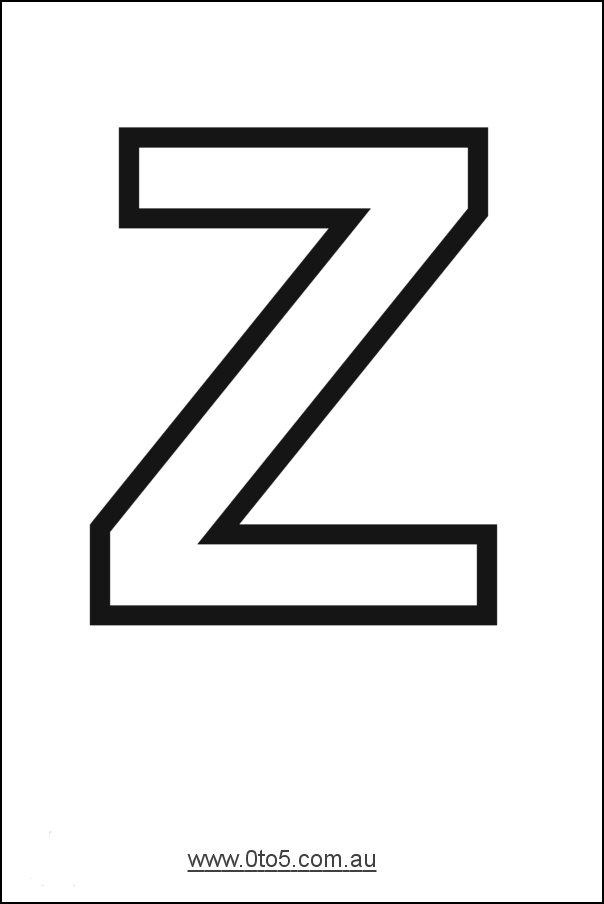
We read an image in the shape of a Z. From top left and finish bottom right.
Ansel Adams
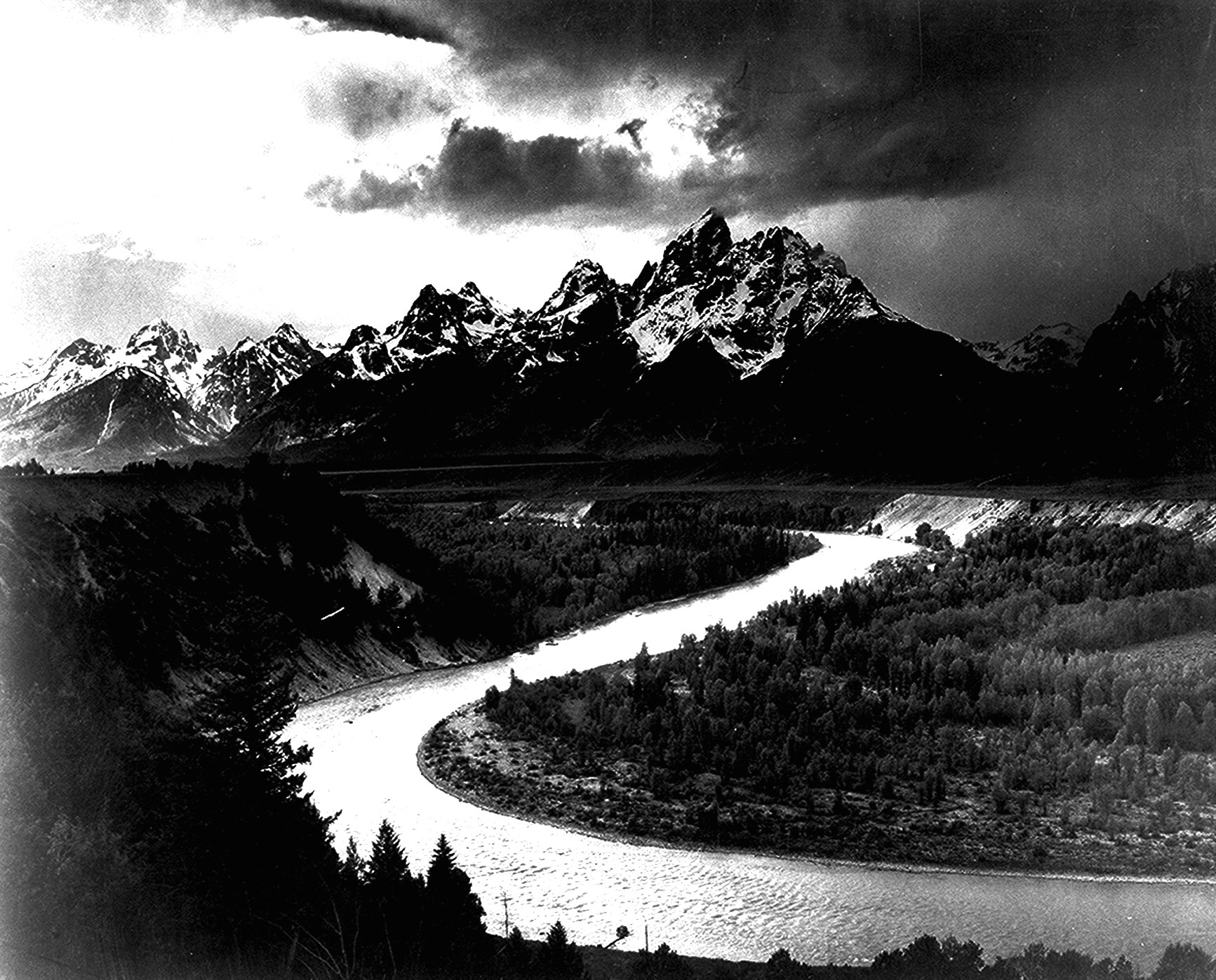
We read an image from the top left in an Z shape. This is a good example of this.
Portrait
Golden Rectangle - 1:16/8
Japanese rectangle is two squares
Experiment secondary composition – try cropping image square, interesting
Robert Capa

Having an image were its perfectly aligned gives a sense of calmness.
David Lachapelle

Having an image that alot going on is quite stressful. Also with the image quite saturated this can give the same effect.
Rule of thirds – Creates balanced image
Example
Ansel Adams – Moon Rise

Composition will communicate something and can also be abstract.
Medium - Medium is the message
The medium you use is what you’re saying. Photo communicates something different from a painting. Medium is a form of communication.
Glossary of terms and how it relates to photography
Gerhard Richter
He paints paintings but they looks like a photo. He puts back grounds out of focus.

Size
The scale of an image does matter. Different relationship with the size. Small- more personal engement is closer.
Technique
Style communicates
i love you – childlike with lower case, simple,
I Love You – More adult version, Valentines
Example - Elegent
Colour
Saturation – Bright and bubbly looking


Rankin

De-saturation – Makes images look washed out, tired.
Hue – warm/ cold
Space
Space is as important as elements. Important in compostion. By removing thing makes image more legible. Overloading.
“Less is more”
How one element relates to something else, create context and relationship.
These are basic element to photography:
Composition, exposure, tone, post production
At present close cropped images are a current trend in portraiture.
Tone
Realtes to exspoure
Black and white

Walker Evans uses black and white through out his imagery.
______________________________________________________________
______________________________________________________
Representation of Death in Photography
Death is natural part of life and the human condition; it is something we all have to go thought at some point. It’s a very tender subject to consider and everyone reacts to it in own their way.
In recent times attitudes have changed dramatically about how we distinguish “Death” in general, so for this debate I aim to discuss photographers that are relevant to the subject, Brazilian photographer Andrea Penteado and German photographer Walter Schels and his partner Beate Lakotta and see how they incorporate this hypersensitive subject into their imagery.
Andrea Penteado
Andrea Penteado’s father Jose Octavio sadly took his own life in January 2007, in Brazil, at the age of seventy two. He quoted in an interview “After his suicide I felt very guilty and lonely. A sense of failure and a feeling that I could have done something to prevent what happened overtook me. I felt a lot of anger towards him as well. I couldn’t believe what he had done to himself and to all of us who loved him so much.”
Andrea wanted a way of remembering his dad and keeping him close for the final time. He photographed his funeral then went to a studio a few weeks later and photographed himself wearing everything in his father’s wardrobe; because he said it was like giving him a hug for last time as his scent and hair was still embedded on to his clothes. The clothes we wear articulate a lot about the people we are because we choose them and it kind of reflects our personality and character.
I believe, he did this not just because he was saddened by his father’s death but felt a sense of guilt for not contacting him for more than a year and this was his way of grieving. This must have been the way he dealt with his pain and anger. His work is quite visually diaristic.

He then went on to photograph the coat hangers that held up his father’s clothes after photographing himself wearing his father’s clothes, he did to show a sense loneliness and the depressing space that was once fulfilled.

There is something simplistic and beautiful about him photographing himself wearing his father’s clothes and the coat hangers because it has such a meaningful concept behind it.
Walter Schels
German photographer Walter Schels and his partner Beate Lakotta photographed and recorded interviews with the subjects in their final days. The photographer was horrified at the thought of death, but at the age of seventy two and the thought of his own death arising quicker made him compelled to document these portraits in their final days and on the day they passed away. Most people were quite happy to have their pictures taken and be interviewed on the thought of death; which was quite a big shock to Schels and Lakotta.
In an interview for The Guardian they quoted:
"The first shoot was terrifying: we were so afraid that we just crept in and photographed the body in profile, lying on the bed, without moving it at all," says Schels. "But when we compared the before-and-after pictures, we realised it didn't work - we hadn't captured the face in a way that mirrored it in its before-death state." Over the next few weeks the pair experimented to overcome the problems of rigor mortis and the effects of gravity on a dead face, until they came up with an answer. "We realised we had to sit the subject up, as they had been in the before-death shot," says Lakotta. She went, she says, from being someone who could hardly bear to touch a dead body to someone who thought nothing of moving a body around and coaxing it into a sitting pose to get a good face-on shot. "But one thing you never get used to is the feel of a dead person - it's always shocking," she says. "It's like cement - that cold, that hard, and that heavy."
http://www.guardian.co.uk/society/2008/apr/01/society.photography
Even thought they only knew these people in their final days, it made him change how he felt about death and also how he lived his own life. These following images of these people appear peaceful, as if they were sleeping. I believe you can tell that the before and after images are the same person. He has used black and white throughout all his images; it gives a sense of significant by the way he addressed the matter.
This image above is man in his final days and the day he died.
Schels quoted:
"What I was used to," says Schels, who has taken hundreds of portraits during his career, "was people who smiled for the camera. It's usually an automatic response. But these people never smiled. They were incredibly serious; and more than that, they weren't pretending anything anymore. People are almost always pretending something, but these people had lost that need. I felt it enabled me as a photographer to get as close as it's possible to get to the core of a person; when you're facing the end, everything that's not real is stripped away. You're the most real you'll ever be, more real than you've ever been before".
http://www.guardian.co.uk/society/2008/apr/01/society.photography
Conclusion
The subject of “Death” is not my most comfortable topic and don’t think I could ever photograph the way Schels and Penteado have. When I researched these photographers and how they dealt with death they both had totally different views and actions, neither which presented images that are obscene or even disturbing. I consider that this has got something to do with what relationship they had with their subjects and also how they both presented their images; Schels uses black and white where as Penteado using colour images, maybe this was relevant to the connection that they had with their subjects. Death is a very personal thing not only in how it is viewed but also how it is reacted to, I think this makes a very interesting topic as each individuals approach to recording it is completely different and then again in how it is viewed.
_________________________________________________
The Sublime
The Sublime
The Sublime deals with forms of expression which have the power to `entrance' us, to `transport us with wonder', as opposed to merely persuading or pleasing us.
The sublime: Last of the Mohicans, 1992, Director Michael Mann, Scene 5
Scene 27/28
Scene 27/28
Three trappers protect a British Colonel's daughters in the midst of the French and Indian War

Sounds
Music
Camera action,
Editing
Scene
Theme of the movie - romance, war and adventure
Music -Delivering most of the emotion, music is quite folk, not directed to period of time, strings used, gun shots
Natural sounds - waterfall, birds,
Scene - Natural landscapes sublime, over powering, wilderness, waterfalls etc,
Camera - Changes in pace, fast then slow paced. Film almost freezes at points.
In the film dialogue is missing.
_____________________
John Vanderlyn
Murder of Jane McCrea - 1804
32x26
32x26
Oil on canvas

Edward S Curtis documented life of American history
Noble savage

Mills and Boon
Publisher pulp fiction romances
Directed to women, very popular and form of escapism,
It's like Disney they are safe with happy ending and controlled.
Jill Tweedie - bad literature but better than binge drinking. Mills and boons have been published more than a century.
Feminist Perspective
modern movement 1970s. Suffragettes
Suffragettes wanted the right for women to vote. "Suffrage" means the right to vote.
Two strands - Social feminist and Radical feminist
Sublime Landscapes
Romantic landscape paintings became a tradition in Europe and America in the 19th century.
John Martin 1789 1854
Sublime landscape
Garden Palace de Versailles

Manipulated by man
Portrait of William style of Langley
Sublime Turner hannible crossing of the alpe
John Martin - The Great Day of Wrath - 1851-1853
Oil on canvas
196.5x303.2cm
Turner snowstorm -
Steam-Boat off a Harbour's Mouth
Sublime changes to another theme.
In the first half of the nineteenth century storm at sea and shipwreck were major themes in British visual
culture.
Legacy of romanticism Shackleton polar expedition the endurance trapped in the ice.
Ansel Adams - Moonrise

Jackson Pollock - Blue Poles
Charlie Waite
